
Autism diagnosis Warsaw
At IN-MED Center, the diagnosis and treatment of autism spectrum conditions are carried out by an exceptional team of experienced specialists—psychologists Joanna Burgiełł-Szkiel and Weronika Pietrzak, as well as psychiatrists Patrycja Wołoszczuk and Paweł Sala.
The team’s collaboration combines solid clinical expertise with sensitivity to each patient’s individual needs. As a result, the diagnostic process is comprehensive and in-depth, based on the complementary strengths of the specialists involved.
If you suspect both ADHD and ASD, ask the reception about a combined diagnostic process.
Everything in one place, within a single center.
At IN-MED Center, the ASD diagnostic process for adults is carried out from the first appointment through to the final medical consultation – all in one place. All stages take place on-site at our facility and within a single team (psychologist + psychiatrist), without the need to transfer parts of the assessment to other centers or to independently gather documentation outside IN-MED.
The process concludes with a psychiatric consultation at IN-MED, during which the doctor – based on the complete body of information – can establish a diagnosis and issue a formal diagnostic certificate.
How does the diagnosis of autism in adults proceed?
First meeting (about 90 minutes)
Second meeting (about 50 minutes)
During the second meeting, for 90 minutes, the psychologist conducts a questionnaire study using the ADOS-2 protocol (psychological diagnosis), possibly expanding the diagnosis based on other psychometric tools depending on the information and interview collected during the first diagnostic session.
Between meetings, the psychologist allocates additional time to analyze the provided documentation from previous psychological examinations, opinions from psychological and pedagogical clinics. He evaluates the information obtained from the psychological examination, from the developmental interview, conducts an evaluation of the results of the questionnaires.
Third meeting (about 50 minutes)
At the third meeting, a summary of the results obtained takes place, discussing with the patient suggestions for a preliminary diagnosis and recommendations. The psychologist emphasizes that the results obtained and discussed with the patient are the starting point for further deepening the diagnosis during the psychiatric consultation.
After the psychological diagnosis is completed, there is a consultation between the psychologist and the psychiatrist, at which the specialists jointly discuss the results obtained so far, determine the further direction of the diagnostic process.
The fourth meeting (about 50 minutes)
During the fourth meeting, a psychiatric consultation takes place. It is necessary to assess the general medical condition and mental state of the person being examined. During the medical consultation, the psychiatrist:
- ompletes the history already collected by the psychologist,
- analyzes the medical records provided or any specialized examinations,
- carries out differential diagnosis in terms of the potential co-occurrence of other mental and somatic ailments.
This is an essential part of the diagnostic process. In individuals on the autism spectrum, other mental health conditions (such as ADHD, anxiety disorders, and depression) as well as certain somatic conditions (e.g., epilepsy, gastrointestinal disorders) occur more frequently than in the general population. These may affect daily functioning or require adjustments to the treatment plan.
Following the medical consultation, a second case conference is held with both a psychologist and a psychiatrist, during which they jointly determine the final conclusions of the diagnostic process, including the final diagnosis and general therapeutic recommendations.


Symptoms suggestive of autism?
Before deciding to begin the diagnostic process, it is worth considering whether there is any basis for doing so at all. Before proceeding with the diagnosis, it is worth considering the possible presence of the following symptoms.
- there are difficulties in recognizing the emotions and intentions of others, which is sometimes the cause of misunderstandings when dealing with others;
- a problem with showing one’s own emotions and limited facial expressions that do not reflect the emotional state;
- difficulties in understanding irony, abstraction, sarcasm – literal treatment of statements containing this type of characterization;
- difficulty in establishing close relationships and experiencing fear of social situations;
- avoiding eye contact;
- showing a strong attachment to routine – difficulty adapting to new situations;
- narrow interests, often focusing on a single topic;
- hypersensitivity to sensory stimuli;
Of course, the above symptoms are not the only ones that occur with ASD. The severity of the features of the autism spectrum is also an individual matter, which means that sometimes certain symptoms can be overlooked.
Benefits of autism diagnosis in adulthood
Some people, even when there are strong indications in their case to start a diagnosis toward autism, wonder what benefits it will actually bring. Virtually every patient who decides to proceed with an ASD diagnosis finds that this step changes the outlook on life so far. It allows one to look at one’s behavior with more understanding. The diagnosis is also the point from which work on improving quality of life begins.
I have a diagnosis – what’s next?
For people with ASD, the diagnosis is the starting point to begin treatment. Autism spectrum disorder is a condition that affects the way a person thinks, communicates and behaves, and it cannot be completely “cured” because it is part of who a person is. However, therapies and support help to better cope with difficulties, develop social skills and improve quality of life. With the right treatment, people on the autism spectrum can function better in everyday life and find their strengths. Treatment should be tailored to the patient’s individual needs, which often requires collaboration with a team of specialists, including psychologists, psychiatrists and occupational therapists.
Once the diagnosis of autism spectrum disorders is completed, patients most often use one of the following methods:
- Psychotherapy plays a key role in ASD therapy. Methods such as humanistic-experiential psychotherapy can be very helpful when working with autistic people, as they focus on acceptance, empathy and authentic contact. The therapist then seeks to understand the world of the autistic person and accepts him or her without judging, which can help build trust and a sense of security. Therapy conducted in this approach supports the development of self-awareness and the expression of emotions, which can sometimes be difficult for people on the autism spectrum. Thanks to such a method of work, a person with autism can better understand his needs and emotions, as well as develop communication skills that facilitate functioning in relationships with others.At the same time,
- Pharmacotherapy can be used to alleviate specific symptoms often co-occurring in the autism spectrum, such as anxiety, lowered mood, and symptoms of obsessiveness.
It is also important to monitor progress and adjust therapy as needed. Support from the family and those around them is paramount in the treatment process, and education about ASD can help build better understanding and acceptance.
Diagnosis of autism in adults Warsaw – contact
f you are looking for an outpatient clinic for adults in Warsaw that provides diagnostics for autism spectrum disorders, we encourage you to contact our facility – you can get in touch via the contact details below:
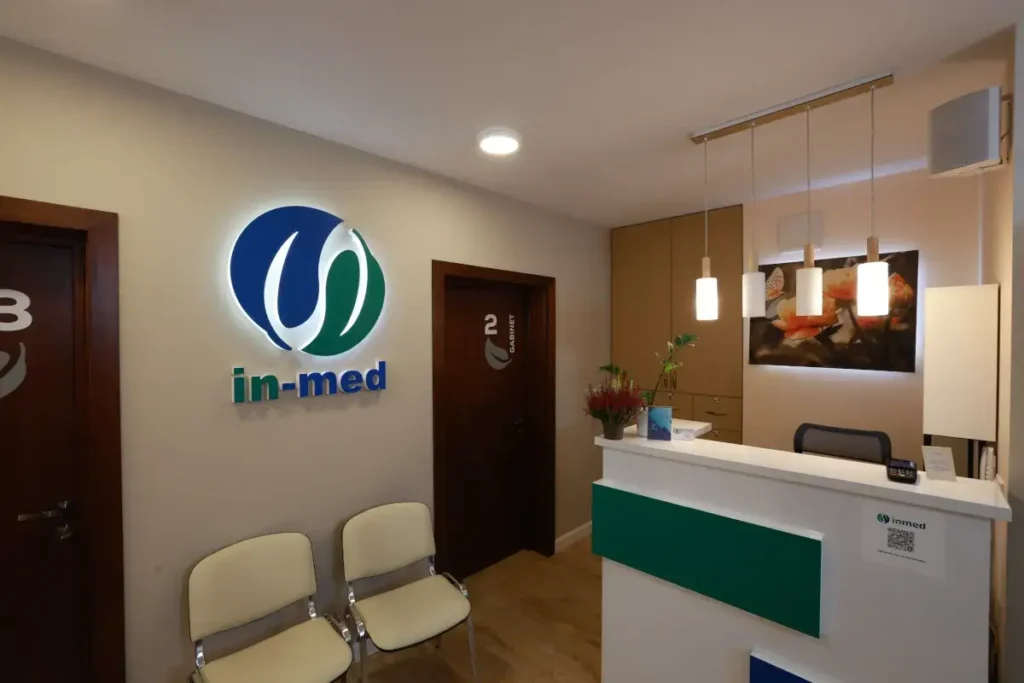
IN-MED Center, Pełczyńskiego Street 5 lok 78, 01-471 Warsaw
- phone: 797 462 002
- email: recepcja@inmed.waw.pl
How to get to our Center?
If you are interested in the diagnosis of ADHD and ASD in adults at our clinic, the IN-MED Center is located in Bemowo at 5 Pełczyńskiego Street.